Co-authored by Lisa Winther, LVT
August 7th, 2026
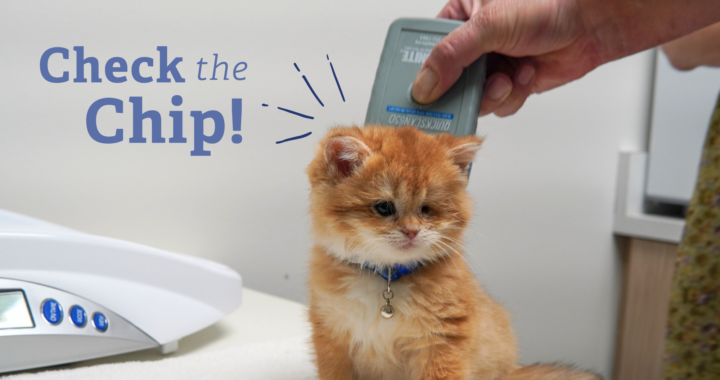
Header photo: Honey, a Community Clinic patient, receives a microchip implantation with her checkup.
August 15th is National Check The Chip Day! Started by the American Veterinary Medical Association (AVMA) and the American Animal Hospital Association (AAHA), this holiday is a chance for pet owners to take simple but life-saving steps to ensure their furry loved ones are up-to-date on their microchip status.
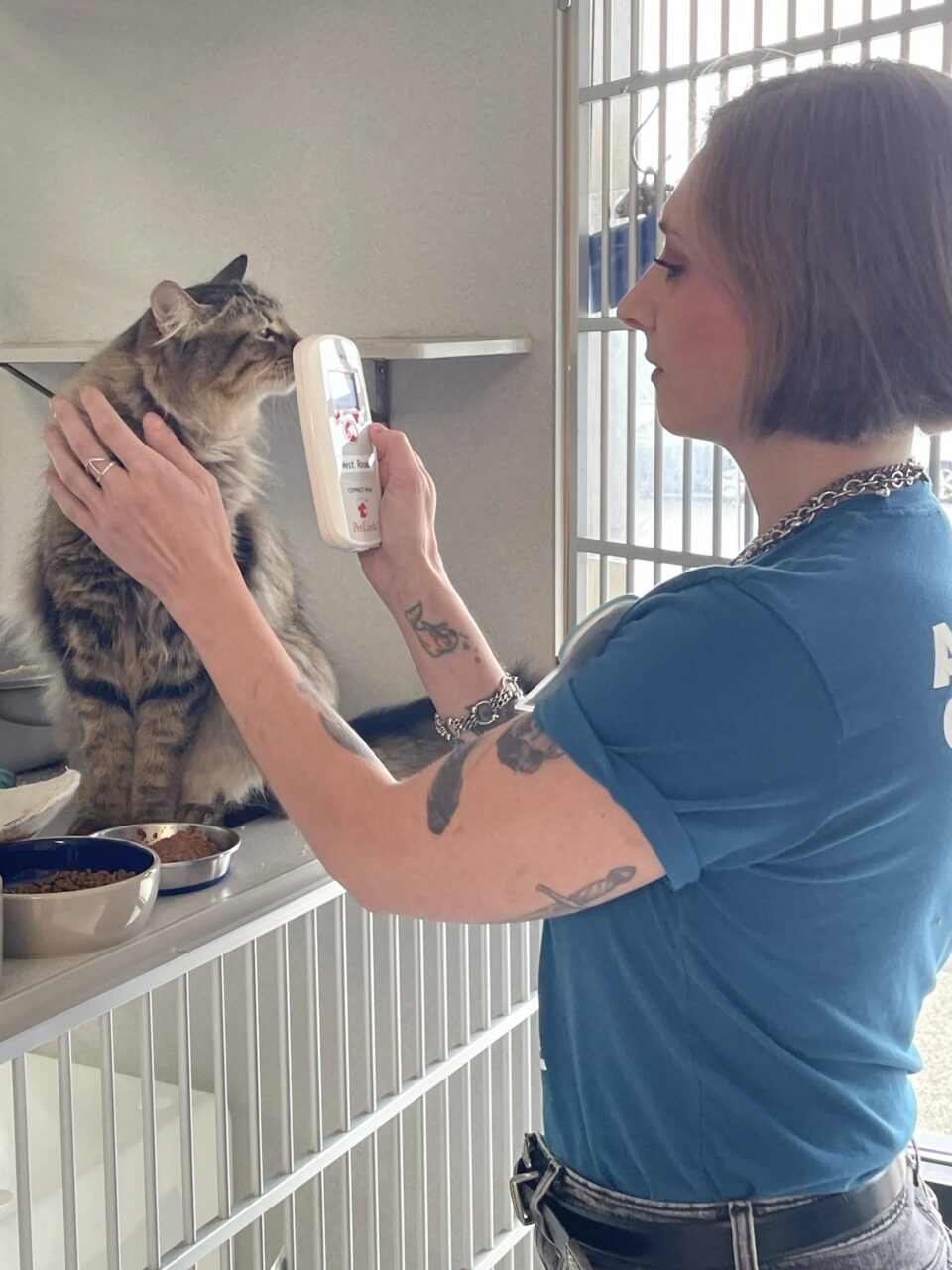
Adoptions Counselor Gianna double-checks Collie’s microchip before sending her home with her new family.
Small Chip, Big Impact
Microchipping may seem small – microchips themselves are roughly the size of a grain of rice – but it makes a huge difference. A 2022 shelter analysis from Human Animal Support Services found that on average, pets with a microchip were over three times more likely to be reunited with their families. Even if your cat is strictly indoor-only, microchips can help identify them in the event of an accidental escape.
How It Works
Microchip insertion is a quick and relatively painless process. It doesn’t even require anesthesia! Using a sterile applicator, a trained veterinary professional places the microchip under the skin between the shoulder blades. The whole procedure takes a matter of seconds.
Every microchip has a unique ID number that can be registered online. When that chip is scanned, the reader displays this number. You can then search that code on a database such as PetMaxx or the American Animal Hospital Association (AAHA)’s microchip lookup registry. As long as the chip has been registered, this accesses a profile containing basic details about the pet, as well as owner contact information.
Why Check the Chip
It’s not just about getting the chip inserted. Over a pet’s lifetime, their microchip may migrate from between the shoulderblades to another part of the body. This is especially possible for cats who got their microchips as kittens. Though this change in location is harmless for the pet, it can make it more difficult to scan. Asking your vet to check for a microchip can help verify its position. If it’s shifted, consider including the microchip ID number on your pet’s nametag as well.
Another reason to check the chip is to make sure your pet’s profile is up to date. If you’ve moved or changed phone numbers since the microchip was first registered, you’ll want to update that information.
So how do you look up that profile without a chip scanner? Many shelters and rescues, including SAFe, send adopters home with a card listing their new family member’s chip number. Even if you’ve misplaced that card, you can reach out to the place you adopted from to request that information.
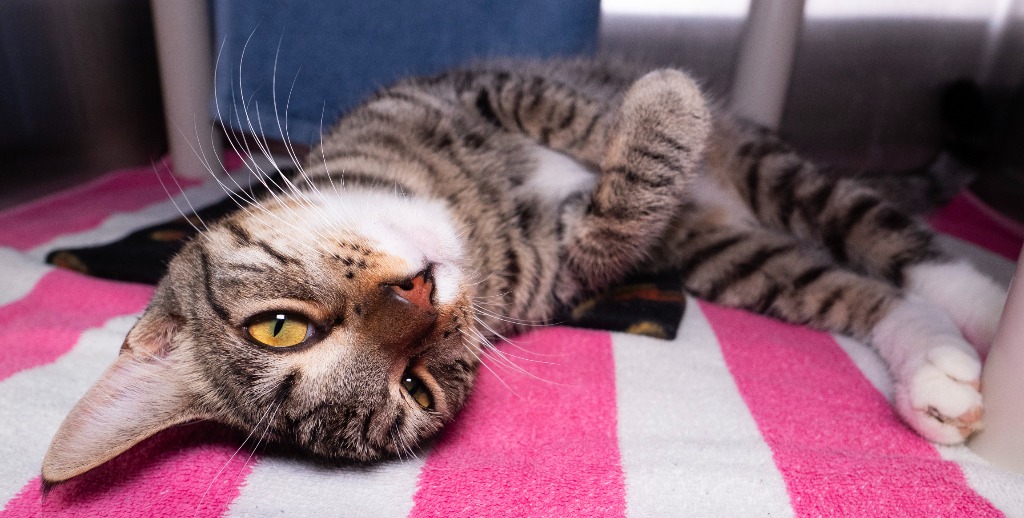
Beholden had ended up 150 miles from home, but thanks to a chip the size of a grain of rice, he was no longer lost.
Beholden’s Journey
Just last month, the SAFe team witnessed firsthand how microchipping changes lives. A sweet-natured, two-year-old brown tabby was brought in on July 21st. Found in a park in Yakima, he was presumed a stray. But his intake exam told another story.
The first thing our veterinary team did was scan for a microchip. The scan returned a number, and the associated record listed a different name, Beholden, along with his birthdate and neuter status. The one thing the lookup did not display was owner contact information.
“I called the microchip company and asked if they had any further information on when the chip was implanted and if he had any registered owners,” says Lisa Winther, LVT, SAFe’s Veterinary Manager. “We found out the cat, Beholden, was chipped in Yakima and did have a registered owner.”
Lisa used this record to get in touch with Beholden’s human.
“I had to leave a message, but Beholden’s owner called me back saying she missed her kitty and would love to have him returned to her!” Lisa says.
Beholden had ended up 150 miles from home, but thanks to a chip the size of a grain of rice, he was no longer lost. SAFe’s intake manager, Olivia, arranged his transport with a Yakima-based rescue partner. This partner normally brings cats in. This time, she was taking one back with her.
Three days later, Beholden was loaded onto a van bound for his hometown. He had gone on quite the adventure, and he was ready to go home!
Conclusion
Beholden’s story shows that Check the Chip Day is more than a cute alliteration: It’s a helpful reminder to follow up on your pet’s microchip status. Here are a few examples of what that can look like, courtesy of AVMA’s website:
- If your pet isn’t already microchipped, make an appointment with your veterinarian now for microchipping. Register your pet’s chip immediately with the manufacturer, making sure all of your contact information is included.
- Ask your veterinarian to scan the microchip during your pet’s annual wellness exam every year.
- Each year on Check the Chip Day, check your pet’s microchip registration information and update it if it’s incomplete or no longer correct.
Getting separated is every pet parent’s nightmare. But it doesn’t have to be permanent. A pet that enters a shelter with an accurate microchip has three times the chance of reuniting than a pet brought to a shelter without one. A few minutes of checking could change the outcome of a distressing scenario. Just look at Beholden!